When Knowing Gets in the Way of Leading

Short on time? Listen to the AI-powered audio version—no scrolling needed.
There’s a quiet comfort in being the one who knows what to do. It makes us feel capable, credible—even calm—in moments that feel anything but. But sometimes, that same certainty that once grounded us can quietly box us in.
This is a story about how I learned to trade “knowing” for curiosity when leading through chaos—and why every leader might explore adding this skill to their toolkit.
When Certainty Becomes a Comfort Zone
I’m a growth-mindset kind of person—the type who defaults to curiosity whenever possible. But I’ll be honest: when I’m surrounded by uncertainty, I’m also quick to retreat into the comfort of knowing. Knowing what to do. Knowing how to respond. Knowing because, hey, I’ve been here before—and if it looks familiar, I’ll just lean on my past experience to give me a sense of structure.
That little dose of certainty helps me feel a bit more grounded when everything around me feels unstable—when systems are fragile, cause-and-effect relationships are unpredictable, and information feels like an endless tidal wave.
And here’s the thing: that reaction is completely normal. It’s human.
Why We Seek Certainty
We make sense of our environment through past experience and emotion. Our memories, emotions, and cognitive biases shape how we interpret new information. Emotions, in particular, don’t like uncertainty—they crave control.
Then there’s predictive coding, the brain’s way of anticipating what will happen next so we can respond faster to potential threats or opportunities. It’s a brilliant survival mechanism—but it also means we sometimes mistake “familiar” for “true.”
This is why organizations often bring in outside leaders or consultants—not just for their skills, but for their perspectives. New eyes reveal overlooked areas and unseen dynamics that insiders can’t see.
Your unique experiences and perspectives are invaluable. Celebrate that! But also make space for reflection. In any given situation, ask yourself:
“Am I holding onto assumptions that might no longer serve me?”
My Own “Knowing” Moment
I learned this lesson the hard way.
When I joined Shopify to lead a new team, I was thrilled. We were part of a small incubator group tasked with exploring bold new product ideas—a dream for someone who loves creativity and innovation. The team operated separately from the core product org so that experimentation could thrive without the weight of continuous improvement cycles.
It was exhilarating—and exhausting.
We were building the plane while flying it, surrounded by the chaos of hypergrowth. Our team was spread across two cities, and when the pandemic hit, we went fully remote. In hindsight, I was sitting in the organizational equivalent of a BANI Matryoshka—a brittle, anxious, nonlinear, incomprehensible world nested inside another.
As a leader, my job was to build and scale my team amid all this change. Having done something similar early in my career, I defaulted to what had worked before. I leaned hard on my playbook from a large, traditional financial organization.
But what worked there didn’t work here.
At Shopify, leaders were expected to bring their own networks, recruit directly, and move quickly. I didn’t know that. Instead of seeking context or asking questions, I relied on my assumptions. I thought I was doing the right thing—meeting with HR, following up diligently—but my “progress” wasn’t progress at all in the eyes of my lead.
And that’s when I realized:
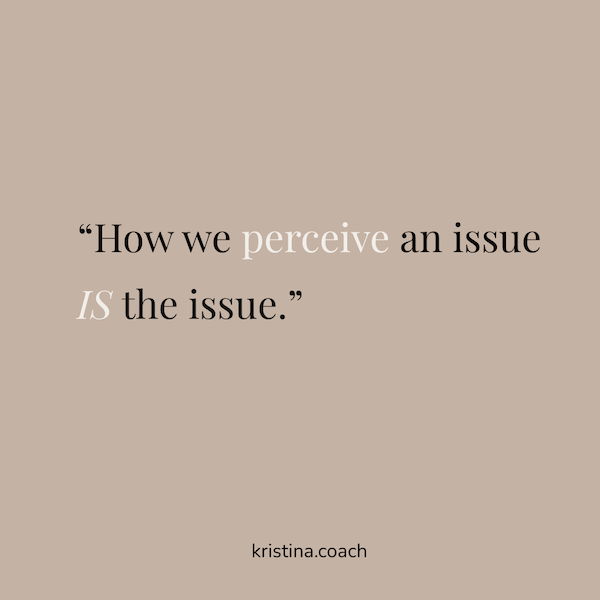
My need for certainty had crowded out curiosity.
The Power of Reflection
That’s why so many coaches and leadership experts emphasize reflection—because when we’re in the messy middle of complexity, our curiosity often shuts down first. Reflection reopens it.
It doesn’t have to be formal. It could look like meditation, journaling, a walk, or zoning out at a baseball game. The point is to create mental space.
And in that space, find people—a mentor, a coach, or even a peer—who can help you:
- Challenge your assumptions with compassion.
- Offer alternative perspectives.
- Build your resilience in uncertain environments.
That’s how we grow beyond our old playbooks.
What I Learned
The story ends well. Once I reoriented, I learned to recruit through LinkedIn and built a stellar team of kind, driven, and creative humans who outlasted the average tenure at Shopify. But I can also see how my initial missteps placed extra pressure on my lead and shaped how others perceived me in those initial days.
If I’d known then what I know now, I would’ve paused sooner to reframe my thinking.
Expert-Backed Practices for Leaders Navigating Uncertainty
If you find yourself in a similar spot—stepping into a new role, leading through change, or trying to prove your capability in unfamiliar conditions—here are a few practices from leading experts to help you stay grounded and curious:
- Build “uncertainty tolerance.”
“Leaders grow when they learn to stay in the discomfort long enough to see what’s really going on.” — Jennifer Garvey Berger
Instead of rushing to solve, practice staying with the ambiguity a little longer. Ask one more question. Listen one level deeper.
- Start with curiosity, not competence.
Harvard’s Amy Edmondson reminds leaders that psychological safety starts with curiosity.
When you’re new, it’s tempting to prove you know what you’re doing. But curiosity builds credibility faster than defensiveness. Replace “I know” with “Tell me more.”
- Create micro-reflection rituals.
Carol Dweck, author of Mindset, calls reflection the key to turning mistakes into growth.
Try ending your day with two quick prompts:
- What did I learn today that surprised me?
- What assumption might I need to revisit tomorrow?
- Borrow other people’s perspectives.
Herminia Ibarra, author of Act Like a Leader, Think Like a Leader, suggests that we “experiment with possible selves.”
Seek mentors, peers, or even reverse mentors who can help you see your situation through a different lens.
- Use “future hindsight.”
Adam Grant recommends imagining you’re looking back a year from now: “What will I wish I had done differently?”
This simple mental exercise helps you step out of reactivity and make decisions with more perspective and less panic.
The takeaway:
As a leader, your past experience is a foundation, not a formula. The real growth happens when you balance what you already know with the humility to keep learning—especially when everything around you feels uncertain.
That’s the paradox of leadership, particularly in the messy middle: your certainty might make you confident, but your curiosity will make you wise.
Written and edited by: Kristina Mausser
Review generated by: ChatGPT, OpenAi. Revised for clarity.
